


Prof. Dr. Helena Holmström Olsson
Prof. Dr. Helena Holmström Olsson is a Professor of Computer Science at the Department of Computer Science and Media Technology at Malmö University, Sweden. She is a senior researcher and theme leader in Software Center (https://www.software-center.se) and in Continuous Digitalization (CoDig) Competence Center. She received her Ph.D. in Informatics from University of Gothenburg in 2004 and did her Post doc in LERO (‘The Irish Software Research Center’) at University of Limerick, Ireland. Her research interests and expertise include engineering aspects of AI systems, data-driven development practices, digital transformation of the software-intensive industry and software and business ecosystems. She is the supervisor of several PhD students in the area of AI engineering, focusing in particular on the business and organizational implications of AI deployment. She has a well-established collaboration with the European software-intensive embedded systems industry. She is a board member of the International Software Product Management Association (ISPMA) and Fairness in Digital Markets and Artificial Intelligence (FIDMA). You can reach her at helena.holmstrom.olsson@mau.se and you find her list of publications here:

Prof. Dr. Vukosi Marivate
Prof. Dr. Vukosi Marivate is a Professor of Computer Science, holds the ABSA UP Chair of Data Science, and is Director of the African Institute of Data Science and AI (AfriDSAI) at the University of Pretoria. He specialises in developing Machine Learning (ML) and Artificial Intelligence (AI) methods to extract insights from data, with a particular focus on the intersection of ML/AI and Natural Language Processing (NLP). His research is dedicated to improving the methods, tools and availability of data for local or low-resource languages. As the leader of the Data Science for Social Impact research group in the Computer Science department, Vukosi is interested in using data science to solve social challenges. He has worked on projects related to science, energy, public safety, and utilities, among others. Prof Marivate is a co-founder of Lelapa AI, an African startup focused on AI for Africans by Africans. Vukosi is a co-founder of the Masakhane Research Foundation, which aims to develop NLP technologies for African languages. Vukosi is also a co-founder of the Deep Learning Indaba, the leading grassroots Machine Learning and Artificial Intelligence conference on the African continent that aims to empower and support African researchers and practitioners in the field. Vukosi is a member of the Independent Scientific Panel for AI for the UN and a member of the African AI Council at Smart Africa.
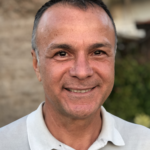
Prof. Dr. Suleyman Sevinc
Academic Entrepreneur | Founder & CEO, Labenko Bilişim A.Ş. Prof. Dr. Süleyman Sevinç is an academic entrepreneur and founder and CEO of Labenko Bilişim A.Ş., Türkiye. He received his bachelor’s degree in Telecommunications and Electronics Engineering from Istanbul Technical University in 1983, followed by master’s and doctoral degrees in Computer Engineering from the University of Arizona in 1986 and 1988, respectively. His international academic career includes tenured appointments at the University of Sydney (1988–1998), a visiting professorship at Czech Technical University in Prague, a professorship and deanship at Haliç University, and a professorship in Computer Engineering at Dokuz Eylül University (2009–2019). His research spans artificial intelligence, modelling and simulation, and healthcare informatics. At Labenko, he translates this expertise into healthcare solutions integrating AI, robotics and digital traceability. He currently leads the development of PRAXIS/TAYA, an agentic AI platform designed to transform the preanalytical layer of laboratory medicine into an intelligent, coordinated and increasingly autonomous system. Moving beyond monitoring, the platform aims to identify root causes of process failures, coordinate people, robotic devices and information systems, and initiate and evaluate corrective actions under defined human oversight—advancing a vision of healthcare AI that actively orchestrates safer, more reliable clinical workflows.